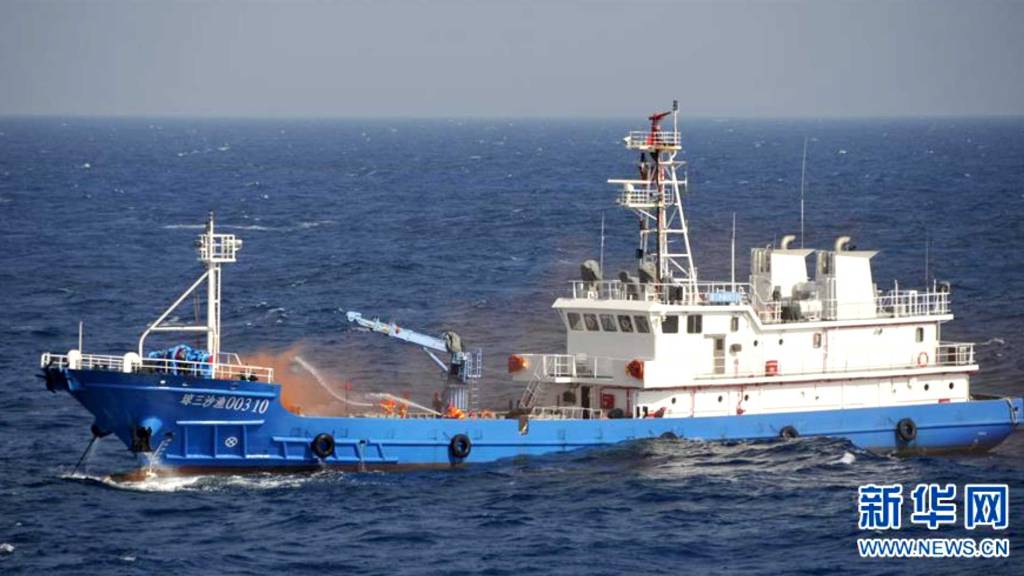
Over the course of the ongoing dispute over contested maritime interests in the South China Sea, China has continued to portray its vessels as innocent research or fishing boats. However, a wide trove of open source information exists on the Chinese Maritime Militia (CMM) and its purpose. China openly boasts a naval fleet of vessels that fall just shy of warships that projects a broader strategic initiative aimed at staking claim to resources and asserting maritime superiority over those who challenge Chinese interests in the region.
Sansha City – Totally a Legit City in the South China Sea.
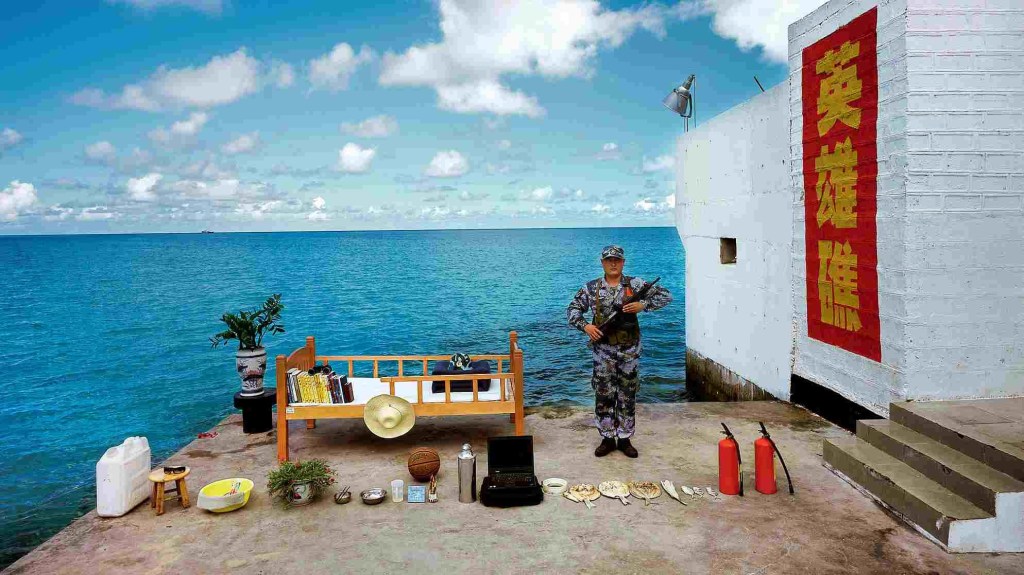
In July of 2012, the People’s Republic of China (PRC) christened the country’s largest city… Well, technically its smallest city with a total land mass of 13 square kilometers that affords a total territorial maritime claim of 2 million square kilometers. Situated on “Woody Island,” Sansha City is the beating heart of China’s claim to nearly all landmasses within the South China Sea. Sansha City’s jurisdiction includes all islands, reefs, and seas existing in the confines of the Spratly Islands, Parcel Islands, and Zhongsa Islands. Based on the jurisdictional boundaries established by the PRC, it is absurdly obvious that Sansha City is no tourist destination or epicenter for economic development.
In January of 2021, The US Naval War College, China Maritime Studies Institute, published China Maritime Report Number 12. This report discusses the Strategic importance of establishing a municipality in the contested waters of the South China Sea, and further defines the relatively ambiguous CMM who operate without impunity in the region, asserting dominance over its resources.
The “Velvet Glove”
Establishing a municipality, complete with schools, transportation, and even tourism ministry, allows for the introduction of civilian-administrated law enforcement agencies and coast guards into the region who’s Chinese citizenry certainly require a degree of domestic security. As such, these agencies become the operational arms who assert Chinese claims in the region, contrary to more overt military operations that will likely provoke responses in the like by other claimant countries. That said, these enforcement arms are very heavily fortified by the PLA Navy, who in turn will bolster efforts to defend territorial claims, should the need arise.
The aforementioned strategic policy was coined by the PRC as “Civil Military Fusion.” As such, vessels deployed to contested regions of the South China Sea are far from innocent “coastal research vessels.” Rather, these maritime units constitute a vast fleet designed and purposed for deterring opposing claimants, and responding with force if needed.
Sansha City Fisheries Development Co, Ltd: AKA The Chinese Maritime Militia.
On May 19, 2021, Benar News published an exposé of sorts, that the state-owned civil enterprise, Sansha City Fisheries Development Company, directly manages a garrison of nearly 2000 militiamen who man approximately 100 steel hulled vessels. This statement was provided by direct admission by Sansha Citiy’s PLA Garrison Commander, Cai Xihong.
Coincidentally, these maritime vessels resemble the 287 vessels observed by the Philippine Coast Guard during their on-going stand-off over several landmasses located within the Philippine Exclusive Economic Zone (EEZ).
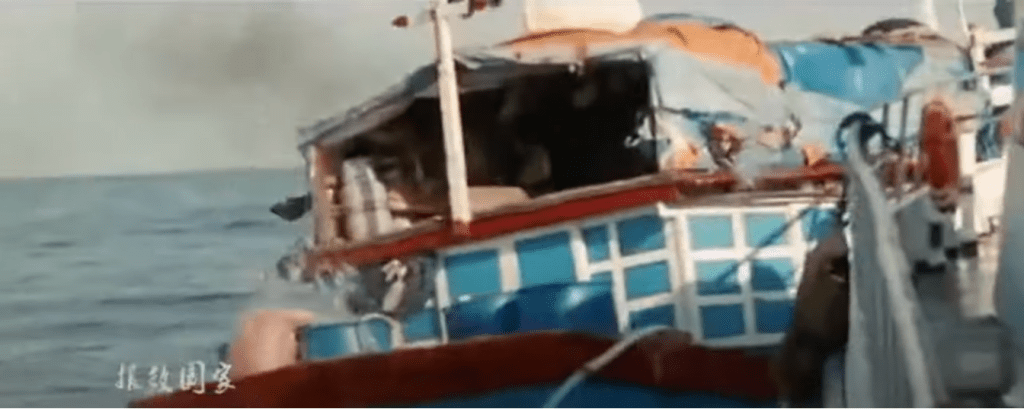
In what appears to be a PLA propaganda film, elements of Sansha’s CMM appear to be using a steel hulled ship to “ram” a fishing vessel during an exercise. It comes as no surprise why the Philippine Coast Guard is growing quite concerned as they face the daily possibility of a maritime confrontation with the CMM.
Comments: It is likely that the maritime fleet encountered by the Philippine Coast Guard are comprised of elements of the CMM garrisoned out of Sanshan City. This is based upon the sheer size of the fleet requiring a significant amount of ancillary services in order to facilitate a sustained occupation in the region.
It is becoming difficult for the Duterte Administration to downplay such blatant aggression displayed by the PLA Navy during this current dispute. It appears China’s overt provocations are serving to test the will of the Philippine Government, as well as gauge the will of its most loyal ally: The United States.
While the PRC has feigned a mild compromise by removing a negligible number of vessels from contested areas, it appears PRC’s strategic interests at large constitute a long term “territorial defense” policy by rooting itself on contested landmasses and establishing remote provincial extensions.
Given the vast resources and buy-in across all levels of state governance, it does not appear the PRC will ever back-down despite diplomatic grievances voiced by all South China Sea Claimants.
 Philippines Security Watch