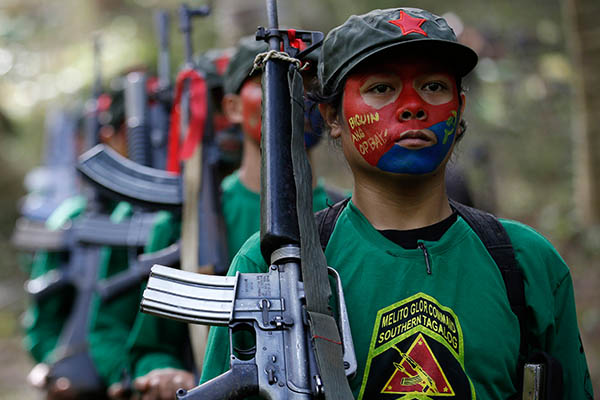
Armed social movements are capitalizing on the economic disaster resulting from the COVID-19 pandemic. This is the case despite the Philippine government’s increased offensives targeting groups, namely the New People’s Army (NPA).
This social turbulence affords both sides an opportunity to win over the masses. However, with opportunity comes unprecedented risk of further distancing the population from either the resistance or the government depending on the efficacy of either campaign.
Sustainability of the NPA.
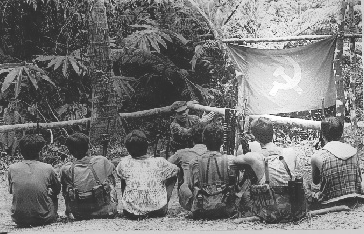
The Communist Party of the Philippines (CPP) NPA is among the world’s oldest insurgencies that has recently surpassed its 50th anniversary. When examining such a persistent resistance to governance, one would logically presume that there exists a significant flaw in governance or that the NPA’s campaigns are extraordinarily effective, or that both may be the case.
The question posed here is how has this insurgency lasted so incredibly long? A thorough understanding of the organization is a suitable starting point, however, the key area of discussion should be focused on the state of the Republic.
The NPA Movement
According to a threat assessment conducted by the Rand Corp, “The CPP-NPA’s principal objective is to replace the current economic and political order in the Philippines with a socialist system.” The furtherance of this objective is exclusively dependent upon a social system writhed with inequities impacting a vast majority of the population.
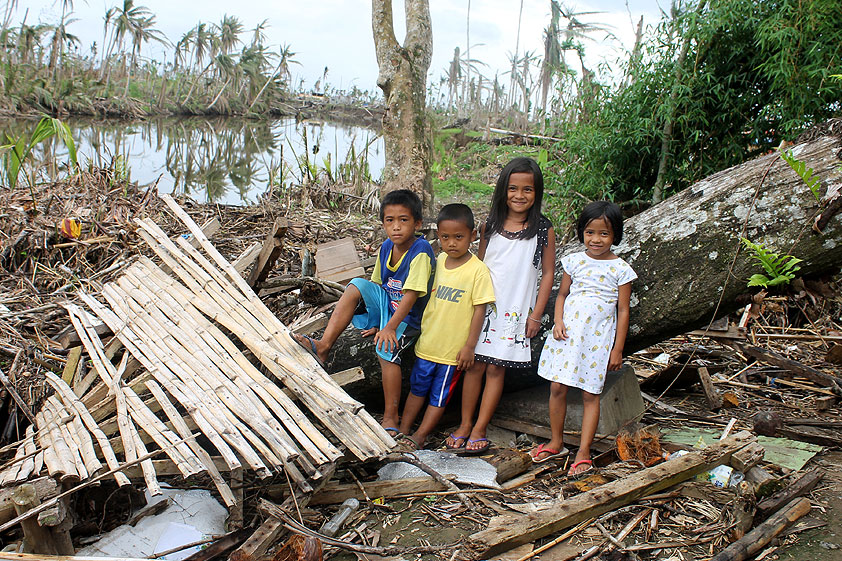
As such, the NPA typically thrives in ungoverned portions of the country where governance is difficult and therefore relatively ineffective. The resulting consensus in these areas is that the government is solely focused on the welfare of those living in key population centers. This results in any effort of governance appearing to be an occupation of sorts, rather than a persistent effort to provide security, safety and welfare to those living in rural parts of the country.
Elements of the NPA political/propaganda arm take these opportunities to field grievances of the disenfranchised population that are typically well in line with the principal objective of toppling the status-quo – typically blamed for the collective plight of the impoverished. Adding fuel to the fire is the strong prevalence of public corruption and astonishing levels of income inequality.
All things considered, it is no wonder how such a small, armed, resistance has lasted so long in the face of a vastly superior conventional military force.
The Environment
Social inequities are the life-blood of the NPA’s resistance movement. As mentioned prior, without such disparities in the qualities of life from person to person, the NPA would be liquidated in a matter of a year.
However, as mentioned in Beautiful Disaster 05/18/2021 there exists a destructive state of socio-economics that is fostering a growing sentiment of dissatisfaction namely among a younger, more educated demographic of Philippine citizens. With the dawn of the internet, more and more tech-savvy young Filipinos are becoming exposed to views that are critical of how Philippine society works.
A great example is a large swath of micro-influencers who point out that the country’s elite appear to be able to travel and move freely despite very stringent quarantine measures instituted by the government. These aren’t efforts even remotely executed by the CPP-NPA. Rather, this is merely objective observations by seemingly “normal” citizens who are experiencing pandemic fatigue.
Therein lies the critical center of gravity that the Government of the Philippines MUST focus on in order to counter revolutionaries. The only way to win over the hearts and minds of the majority of Filipinos who are indifferent to either the NPA or the government is to address these social inequities.
Government forces have engaged NPA rebels in highly successful military campaigns that, by the numbers, represent significant victories. However, closer to home, in the living rooms and in internet forums, the government is losing the fight over hearts and minds.
A calculated assessment that utilizes basic arithmetic will provide an accurate prediction of how open warfare with the NPA will conclude, the victors being unequivocally the Armed Forces of the Philippines. However, in the counter-insurgency it appears the government is not executing a robust, effective campaign that counters the NPA narrative.
The Solution

The Philippine National Police Special Action Force (PNP-SAF) has long since been considered the mortal enemy of the NPA. Of all military and paramilitary organizations, the SAF has registered the most, by far, combat engagements with the NPA. Perhaps this explains the modern and textbook approach to counter-insurgency.
Outreach conducted by the SAF appears to target the most impoverished regions of rural Philippines. These outreach activities vastly outnumber military offensives against the NPA, which speaks to the strategic focus of the PNP.
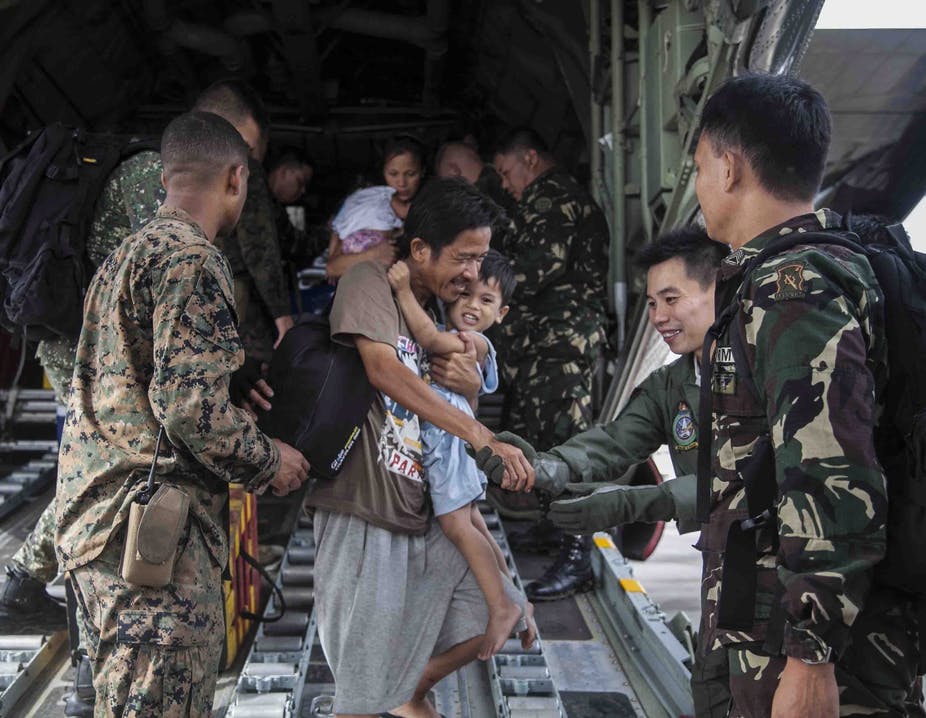
Further, these activities are consistent with the SAF’s reputation as a legitimate and trustworthy government agency. Such outreach amounts to public education, infrastructure building, and humanitarian assistance. This COIN campaign activities are punctuated with skirmishes and gunfights with the NPA. However, the civil outreach dominates media releases as opposed to body counts and casualty reports.
Traditional approaches to engaging armed resistance typically relies heavily on a war of attrition. However, as history reminds us, conventional military offenses usually catalyze insurgencies rather than quell them.
In an effort to disarm the NPA, specifically, it is incumbent upon the government to address key vectors of exploitation – the most obvious being the wide income disparity. Else, the government runs the supreme risk of losing the hearts and minds of the population, plunging the country into a bloody internal conflict.
 Philippines Security Watch